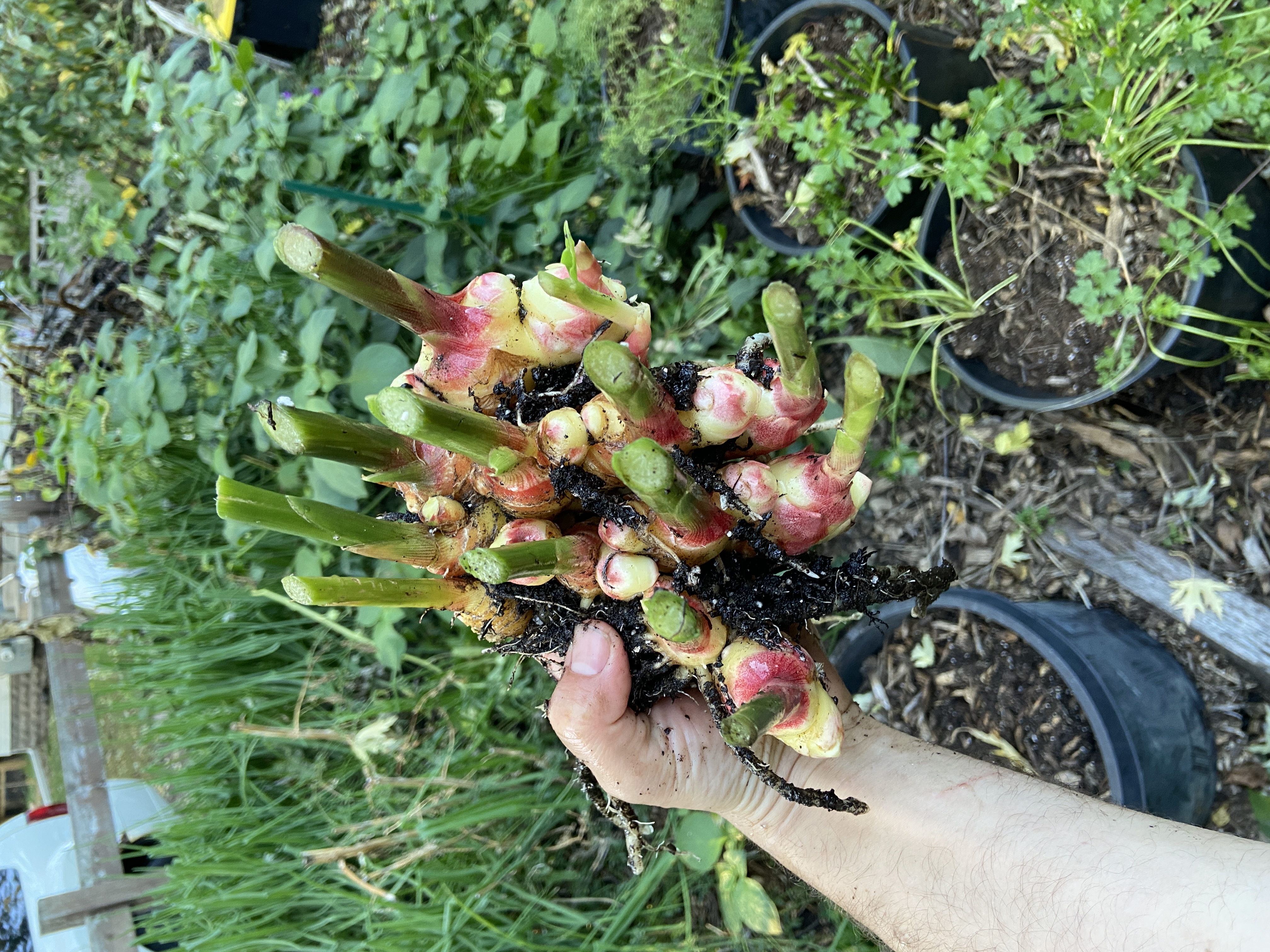
 Before we talk about how, I want to tell you why you should grow ginger: Obviously, it’s delicious, but it also does well in a variety of garden types, can survive neglect, produces a lot from a single plant, can be expensive at the grocery store, is more pungent fresh, can be stored in the freezer for an extended period, and can be saved from year to year to grow even more ginger! Hopefully that’s enough to convince you of the why, so let’s get to the how.
Ginger is tropical and grows wild in forest understories. While it does want hot, sunny weather, dappled shade is closer to its natural environment. If you’re on top of watering, full sun is great and will yield a little more at the end of the season, but if you like to plant it and forget it, try a part-shade area to give your ginger some protection from the harshest summer days. Either way, wait for night time temperatures above 45°F to plant or you risk damage and delayed growth.
Planting directly in the ground works well, but the real magic of ginger is in container-growing. Maybe you bought a fruit tree in a large pot this year? Plant that tree, then refill the empty pot with compost and/or potting mix. I like to put two ginger seedlings in a single 5-gallon pot. The width of the pot is more important than the depth.
Wherever you plant, put your ginger just below the soil surface so the rhizome—the part we eat—is covered, but the green stalks are not. Lightly mulch to help regulate the soil’s temperature and moisture, especially if you tend to forget about your garden by late June.
Now for the less straightforward part, watering. Have no fear, ginger is resilient! Last summer I grew ginger in pots on my alley parking pad. I watered them about half a dozen times between May and October and still harvested several pounds. That’s all to say, you can neglect this plant, especially if they are in part shade. If you’re more attentive or use irrigation, water just enough to keep the soil damp but not soaked. It’s worse to over-water because that can lead to root rot.
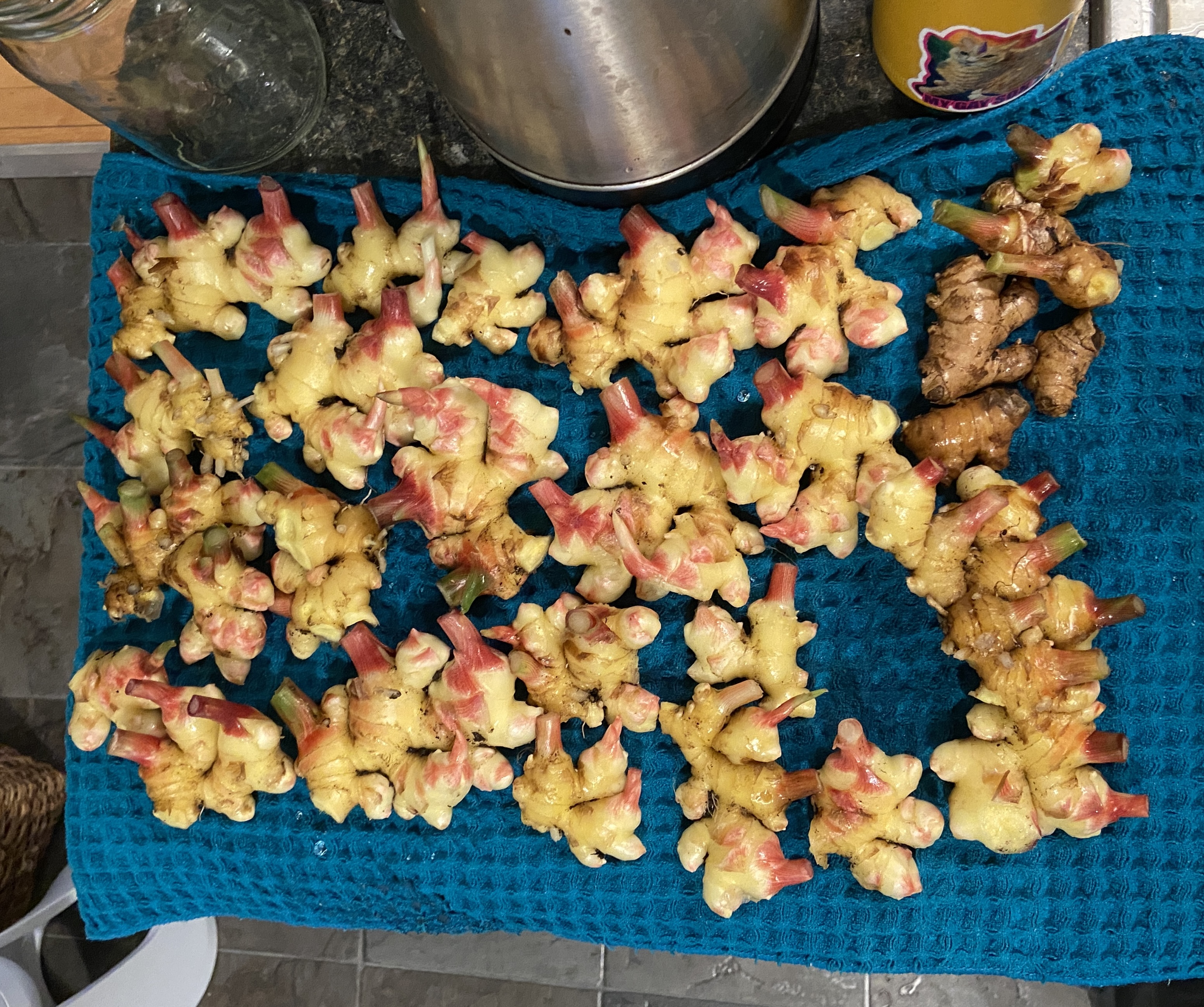
Throughout the season, the rhizome will spread horizontally underground, periodically sending up new green stalks. To give your ginger as much time to grow as possible, dig it up just before the first fall frost—no later or you risk ruining your hard-earned harvest! Cut off the leaves, wash the roots, and use within a week or freeze in large chunks for up to two years.
If you want to save some rhizomes to replant the following year, choose pieces without wounds, cover them in sand, and then store inside at 50–60°F in a low humidity environment. Around Valentine’s Day, break the rhizomes into thumb-sized pieces, let the wound air-dry for a day or two, then plant in potting mix just beneath the soil surface. Within a month, new leaves should start growing and you’ll have brand-new seedlings to plant in your garden.
—A.J. Zozulin