 We sell some vegetables as seeds rather than as plants. Here’s why:
- Early May is just too soon for some tender and fragile plants to be outside.
- Plants like melons, cucumbers, and squash are actually vines, which get tangled together and are easily damaged before they can be sold.
- It’s cheaper for you and just as reliable to plant these vegetables as seeds directly in the ground. The packets come with instructions.
- You’ll have access to more varieties, including plants like beans, peas, carrots, and radishes, that don’t transplant well.
- You can share and swap extra seeds with your friends.
- You might want to keep some seeds to plant a late summer crop (especially great for lettuce, carrots, radishes, beans, and peas).
We do sell some cold-sensitive vegetable plants (marked with a †), especially tomatoes and peppers, since they need more of a head start in our short growing season. Keep them indoors or in a cold frame until night temperatures are above 55°F.
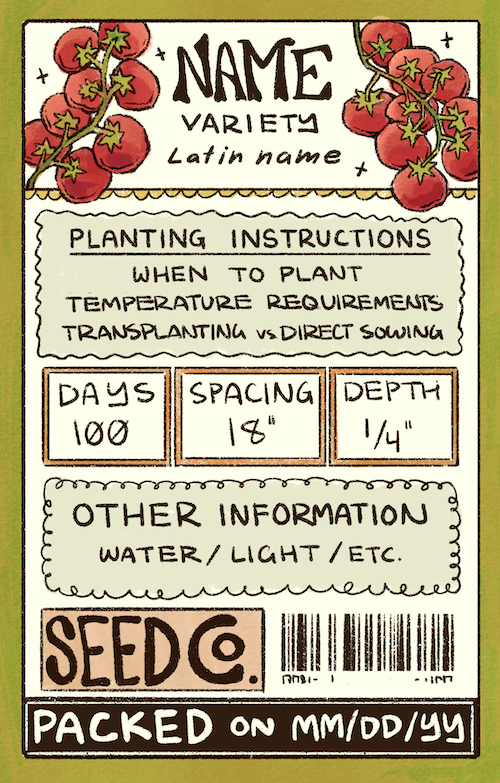
Reading a seed packet
New to sowing seeds? Here are some definitons of common terms you will find on a seed packet:
Days: Indicates the number of days between planting and harvest.
Thinning: Some seeds are sown close together. Thinning means removing some of what germinated, giving the strongestplants more room and resources.
Planting depth: How far below the soil surface you should plant the seed.
Spacing: Indicates the distance to leave between each seed you plant.
Packed for date: All seeds we sell are packed for the current year, but you might not always use a full pack in one season. If you have seeds leftover, check the packed for date. Germination rates drop over time; if you use older seeds, try planting more in each spot to increase the chances that one will grow.