If you haven’t read our plant description for Garden Huckleberry), do that now, I’ll wait… Done? Great! Now you know a little bit about Garden Huckleberry, but there is so much more.
This plant is not a true huckleberry. Unlike real huckleberries, which are related to blueberries, garden huckleberry is a close relative of several common garden plants: tomatoes, peppers, and potatoes. That makes it part of the Nightshade plant family, or Solanaceae. It’s also a part of a group of plants commonly called black nightshades.
Black nightshades are one of the most widely eaten plants in the world, both the berries and cooked stems and leaves. They go by a lot of different names, including Garden Huckleberry, Njama Njama, Managu, and Wonderberry, a plant we sold last year.
Black nightshade can refer to any of a dozen or more species distributed across every continent (except Antarctica) that look incredibly similar. When confronted with a type of black nightshade, even a trained botanist can struggle to identify the exact species.
With all this talk of nightshades, you might be wondering how deadly nightshade (Atropa belladona) fits into the picture. This association is not entirely unwarranted: deadly nightshade is also in the Solanaceae family, but it is easily distinguished from black nightshade by its flower color and shape. Most importantly, black nightshade is not deadly. Despite this, in 17th century Europe, reports of deadly nightshade poisoning were falsely attributed to black nightshade due to both plants being referred to as simply “nightshade.” Because of this history, black nightshade is commonly mislabeled as deadly poison in the U.S. to this day (it is even listed on the Poison Control website).
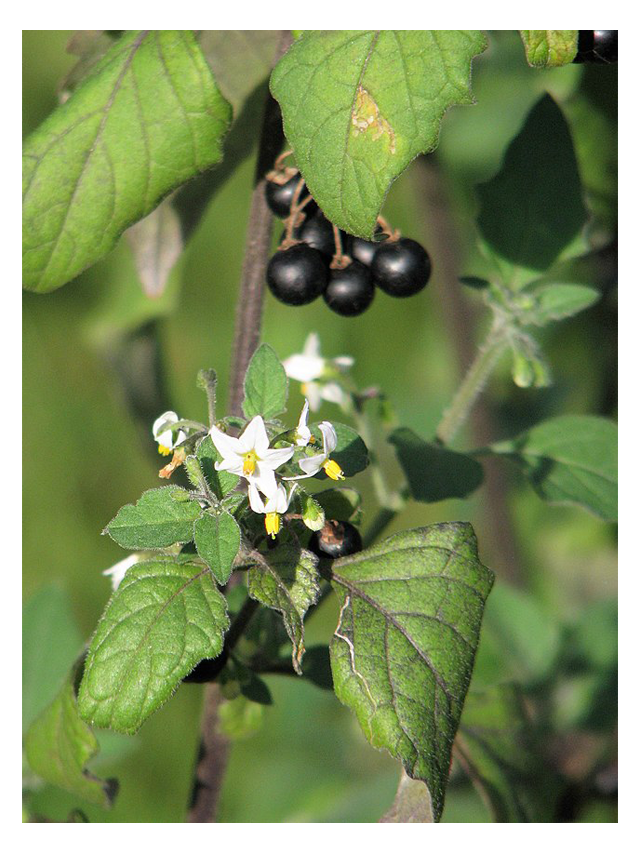
Black nightshades, like all species in the genus Solanum, do contain some poisonous chemicals called glycoalkaloids, of which the most recognizable is solanine. However, it is important to remember that the dose makes the poison, and domesticated vegetables have a miniscule dose, if any, of these glycoalkaloids in them. As for black nightshades, information about their solanine levels is hard to find since they aren’t a commercial crop in the U.S. One study conducted in Taiwan determined that the unripe fruit of a local black nightshade contained the highest concentration of solanine. Not enough to poison yourself (unless you want to eat an unpleasant amount of bitter, hard berries), but enough for a stomachache. Therefore, even among the enjoyers of this delicious food, we recommend not eating green berries (just like you shouldn’t eat green potatoes).
Don’t let all this talk of poison deter you; many edible plants have toxic parts, need to be prepared in specific ways, or affect the body negatively if you consume too much. Follow in the footsteps of billions of people throughout time and around the world who have enjoyed eating black nightshades and give Garden Huckleberry a try.
—A.J. Zozulin
If you want to learn more about black nightshade, this article from the Forager Chef is a good place to start.